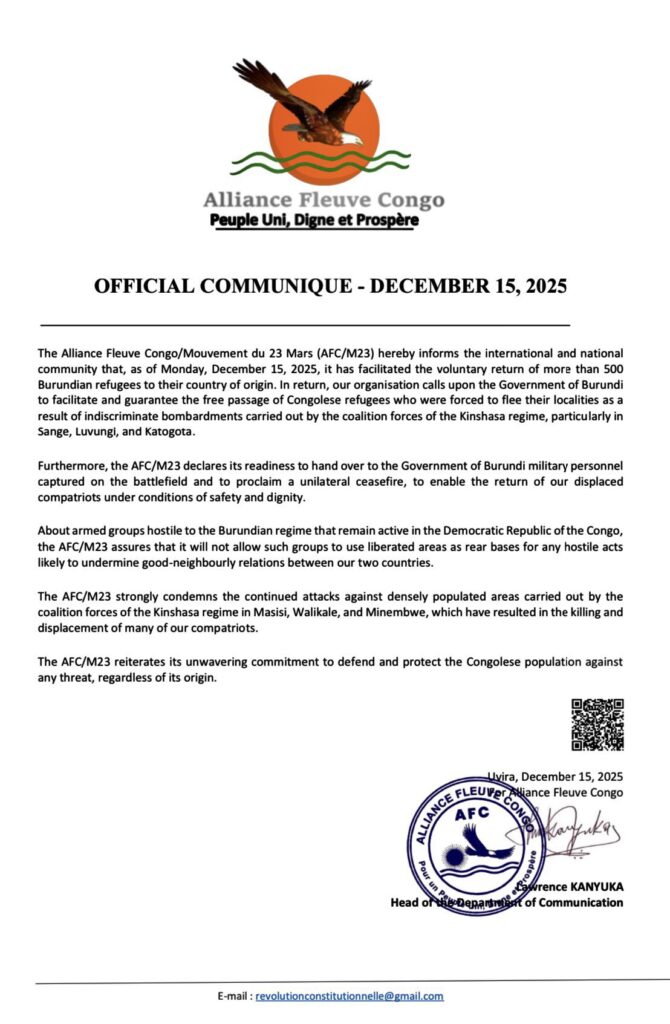

The Alliance Fleuve Congo/Movement of March 23 (AFC/M23) has released an official communiqué outlining a series of humanitarian and security-related decisions it says are aimed at easing tensions and improving civilian protection in eastern Democratic Republic of Congo.
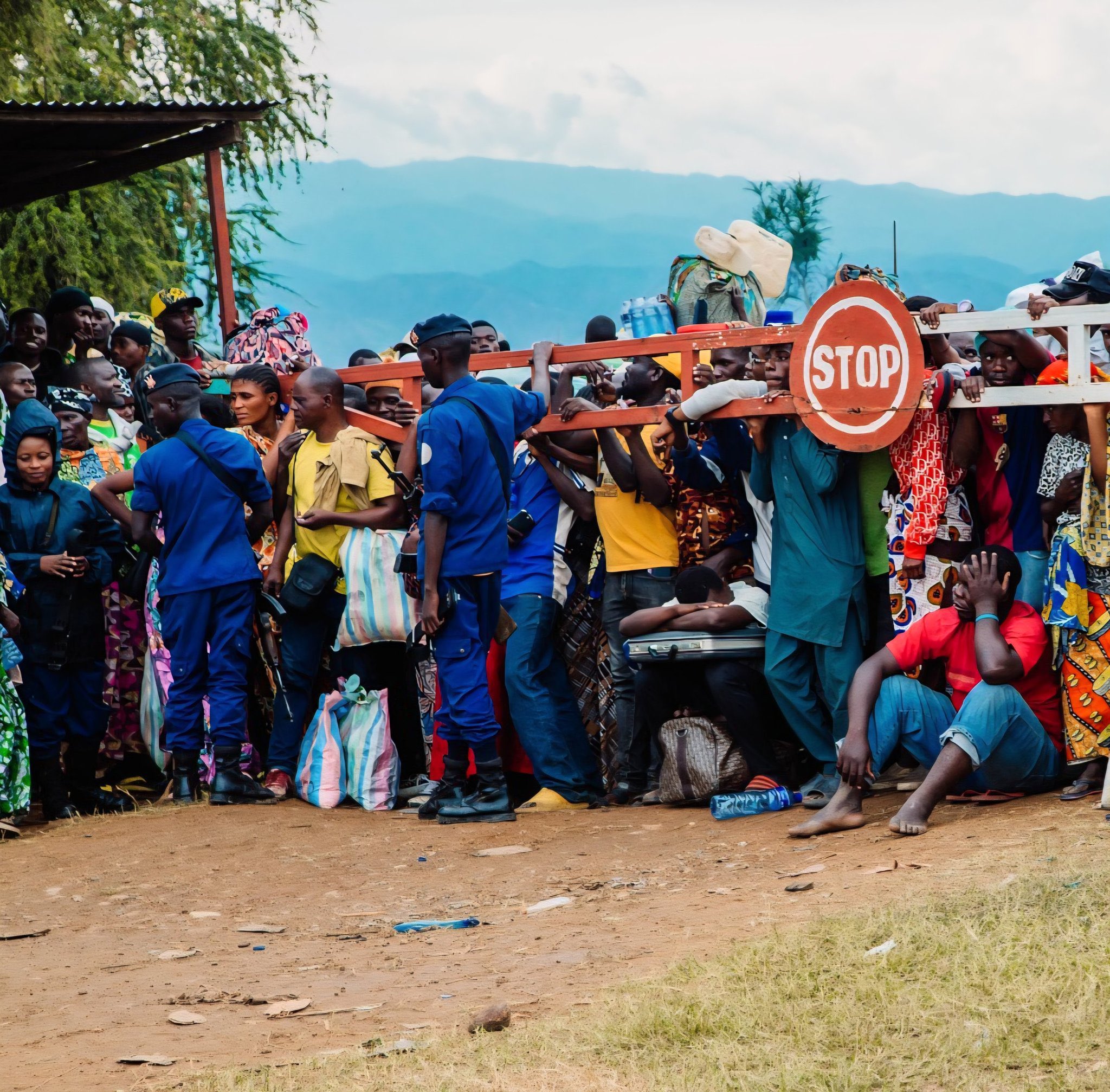
In the statement dated December 15, 2025, and issued from Uvira, the group announced that it has facilitated the voluntary return of more than 500 Burundian refugees to their country of origin. According to the AFC/M23, the repatriation was conducted peacefully and is presented as part of what the movement describes as its commitment to regional stability and respect for civilians affected by conflict.
In return, the group called on the Government of Burundi to facilitate and guarantee the free passage of Congolese refugees who were forced to flee their homes following what it described as indiscriminate bombardments in areas including Sange, Luvungi, and Katogota. The AFC/M23 attributed these displacements to military operations carried out by coalition forces aligned with the Kinshasa government.
The communiqué further states that the movement is ready to hand over Burundian military personnel captured during fighting and has expressed its willingness to declare a unilateral ceasefire. According to the group, such a move would be intended to allow displaced Congolese civilians to return to their communities under conditions of safety and dignity.
Addressing regional security concerns, the AFC/M23 also pledged that it would not allow armed groups hostile to Burundi to use areas under its control as rear bases for attacks that could undermine relations between the two neighboring countries.
At the same time, the movement strongly condemned ongoing attacks in densely populated areas of Masisi, Walikale, and Minembwe, which it says have resulted in civilian deaths and further displacement.
The statement concludes by reaffirming the AFC/M23’s position that it remains committed to defending and protecting Congolese civilians against any threat, regardless of its source, while urging broader regional and international attention to the humanitarian situation in eastern DRC.